
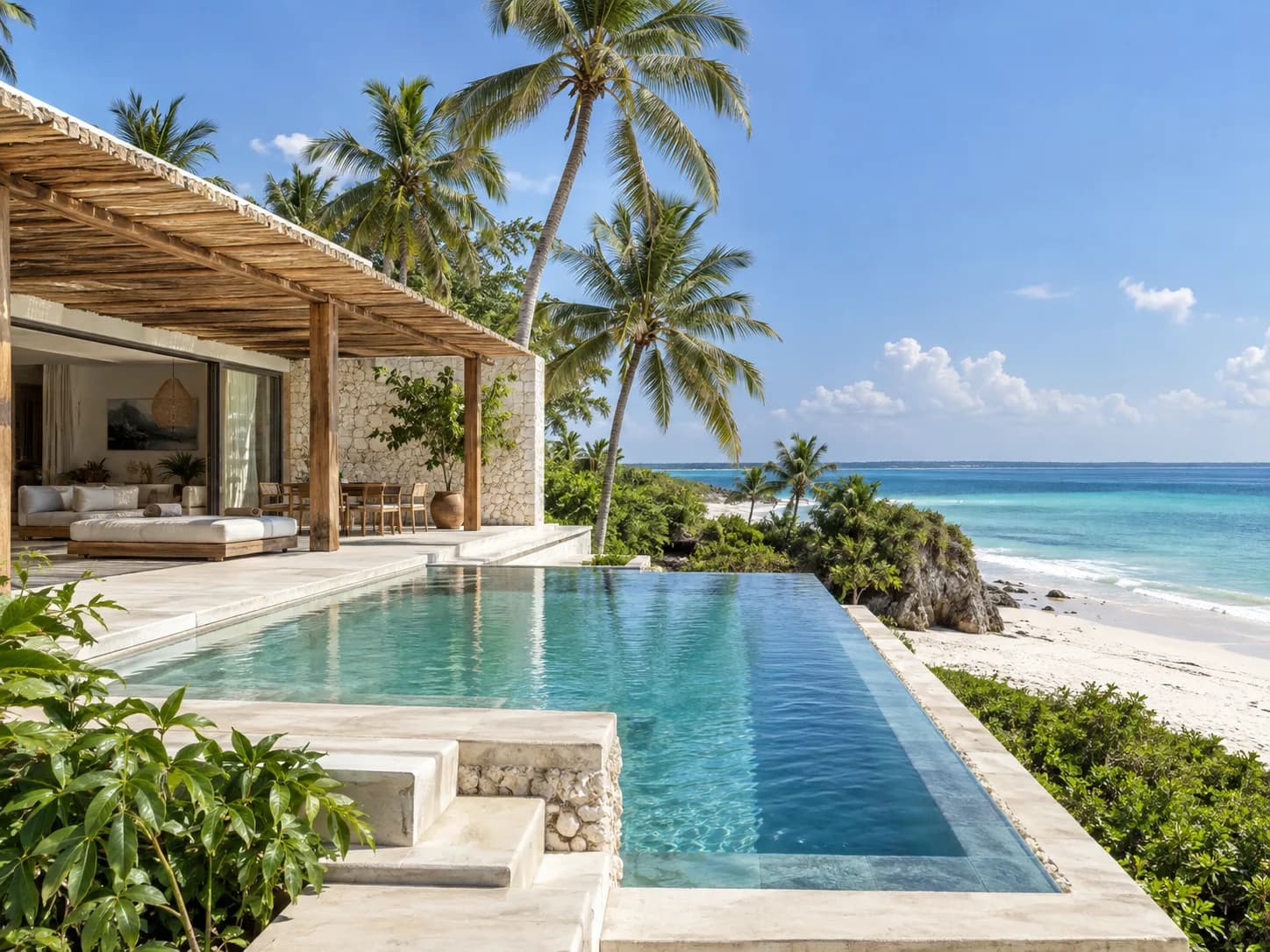
Choosing between short-term holiday rentals and long-term leasing is a pivotal decision for Zanzibar property investors. Each model serves different property types, locations, and investor objectives. This guide breaks down the key differences.
Short-Stay Holiday Rentals
Short-stay rentals target tourists, digital nomads, and short-term visitors. Properties on platforms like Airbnb, Booking.com, and through boutique management companies serve stays from 2 nights to 4 weeks.
**Best locations**: Paje, Nungwi, Kiwengwa, Matemwe — areas with strong tourism demand.
**Yield potential**: 10–15% gross, but with higher operational complexity.
**Key requirements**: Professional photography, dynamic pricing, concierge-level guest service, regular cleaning and maintenance.
Long-Term Leasing
Long-term leases of 6–24 months target expat professionals, diaspora families, NGO staff, and long-stay digital nomads.
**Best locations**: Stone Town, urban centres, expat-friendly neighbourhoods.
**Yield potential**: 6–9% gross, with lower operational overhead.
**Key requirements**: Furnished apartment or villa, reliable utilities, stable internet, lease agreement management.
Comparative Analysis
| Factor | Short-Stay | Long-Term |
|--------|-----------|-----------|
| Gross yield | 10–15% | 6–9% |
| Occupancy | Seasonal | Stable |
| Management | Intensive | Low-touch |
| Guest turnover | High | Low |
| Regulatory | Tourism levy | Standard lease |
| Flexibility | Owner use possible | Fixed term |
Hybrid Approach
Many successful Zanzibar investors adopt a hybrid strategy — targeting short-stay during peak season and transitioning to mid-term (1–3 month) rentals during shoulder seasons. This maximises annual occupancy while capturing premium seasonal rates.
Choosing Your Strategy
The right approach depends on your property location, management capacity, and income goals. Start with an honest assessment of how involved you want to be in day-to-day operations, then match your property to the appropriate model.